Email: info@touchsh.com
User

[Scene Story] From -20°C Cold Storage to High-Temperature Workshop: An Industrial All-in-One PC's "Extreme Survival" Documentary
2026-09-03 15:01:45
23
[Scene Story] From -20°C Cold Storage to High-Temperature Workshop: An Industrial All-in-One PC's "Extreme Survival" Documentary
[Shanghai, China — September 3, 2026] — Most computers live comfortable lives on desks in climate-controlled offices. Industrial all-in-one PCs don't have that luxury. They are bolted to vibrating machines in dusty factories, installed in -20°C cold storage warehouses, placed near 60°C forging furnaces, and expected to run 24/7, year after year.
This is the story of one Senke industrial all-in-one PC and its journey across three dramatically different extreme environments.
Act 1: The -20°C Cold Storage Warehouse
Our story begins in a frozen food distribution center kept at a constant -20°C. The PC is mounted on a forklift, used by operators to scan inventory and manage pallet locations.
At -20°C, a standard computer simply wouldn't work:
- LCD response slows dramatically — standard panels go from 10–20ms to 200–500ms+, causing ghosting and sluggish touch
- Cold-start failure — components may not initialize correctly at extreme low temperatures
- Condensation — moving between -20°C warehouse and 5°C loading dock causes water droplets to form inside the enclosure, shorting circuits and fogging the display
- Gloved touch issues — thick insulated gloves make standard capacitive screens unresponsive
How It Survives
- Wide-temperature LCD panel with integrated PTC heater — maintains fast response down to -20°C; heater warms the panel within 60–90 seconds of power-on
- Full-lamination optical bonding — eliminates the air gap, so condensation has nowhere to form inside the display
- IP65-sealed enclosure — silicone gaskets and waterproof cable glands prevent humid air from entering; optional conformal coating protects the PCB
- Wide-temperature industrial components — CPU, memory, eMMC, capacitors all rated for -20°C+; boots in 8–12 seconds even after 12-hour cold soak
- Enhanced PCAP touch controller — supports operation with thick insulated gloves and includes water-rejection technology
Result: Six months in -20°C cold storage with 40+ daily temperature transitions — zero failures, zero condensation issues.
Act 2: The 55°C High-Temperature Forging Workshop
The PC is redeployed to a metal forging workshop where ambient temperatures reach 50–55°C near the presses, with metal dust and oil mist in the air. It's mounted on a forging press control station for process monitoring and quality data entry.
At 55°C, a standard fan-cooled PC faces:
- Thermal throttling and shutdown — incoming air at 55°C can't cool the CPU; performance drops to 50% or less, then the system shuts down
- Fan failure and dust clogging — metal dust and oil mist clog heatsinks, coat fan blades, causing fan failure within 6–12 months; monthly cleaning required
- Component lifespan reduction — every 10°C increase roughly halves component lifespan; expected life drops from 5–7 years to 2–3 years
- Display degradation — standard LCDs rated only to 50°C; backlight LEDs dim prematurely, polarizing films yellow
How It Survives
- Fanless passive cooling — no fan, no ventilation openings. Copper heat pipes transfer CPU heat to the aluminum alloy enclosure, which serves as a large external heatsink. Dust and oil mist cannot enter; no fan to fail; no monthly cleaning
- Thermal design for sustained full load — CFD simulation + thermal chamber validation ensure 100% CPU/GPU load at 55°C without throttling. Low-power ARM/Celeron processors reduce heat
- High-temperature components, derated operation — all components rated to 70°C+; operated below maximum ratings to extend lifespan 5–10x. Polymer capacitors. Backlight LEDs driven at 70–80% current for 50,000+ hour life
- Wide-temperature LCD — rated to 70°C; maintains >80% brightness after 5 years at 55°C
- Anti-thermal-cycling design — CTE-matched materials, PCB stiffening, conformal coating, and lead-free SAC solder reduce solder joint fatigue
Result: Six months at 55°C with continuous vibration and metal dust — no throttling, no fan failures, no cleaning, zero downtime.
Act 3: The Transition — Thermal Shock, Vibration, and Condensation
Between the two environments, the PC faced the harshest test: removed from -20°C, transported in an unheated truck for 2 hours, carried through a 25°C office, and installed in the 55°C workshop — a 75°C temperature delta over a few hours.
This transition exposes the PC to:
- Thermal shock — rapid temperature change stresses solder joints, display bonds, and connectors
- Vibration and shock — road vibration (5–200Hz) and loading/unloading shock (up to 10g)
- Condensation — the cold PC moving through warm, humid air causes condensation
How It Survives
- CTE-matched materials and flexible interconnects minimize thermal shock stress; controlled warm-up on cold power-on; tested per IEC 60068-2-14 thermal shock
- Solid-state everything, soldered components, board stiffening, locking connectors, MIL-STD-810G equivalent vibration/shock testing
- IP65 sealing + full-lamination + conformal coating prevent internal condensation even during extreme temperature transitions
Result: Powered on normally in the 55°C workshop with zero issues from the transition.
The Engineering Behind the Survival
Across all three environments, the PC survived because of eight core engineering principles:
- Fanless passive cooling — no fan to fail, no vents for dust/moisture
- Wide-temperature everything — LCD, CPU, memory, storage, capacitors, connectors
- Full-lamination optical bonding — eliminates condensation air gap
- IP65 sealed enclosure — prevents dust and moisture ingress
- Solid-state storage — no moving parts, reliable across extremes
- Integrated LCD heating — fast response and cold-start in low temperatures
- Hardware watchdog timer — automatic recovery from any software hang
- Comprehensive testing — thermal chamber, thermal shock, vibration, IP sealing, 48–72hr burn-in
Senke's Industrial All-in-One PC Lineup
Senke's lineup is engineered for extreme environments:
- YPC-A Ultra-Thin — slim design, 7"–27", full-lamination, fanless, IP65, wide-temperature
- YPC-WD Dustproof — fully-sealed IP65, fanless ventless, for high-dust environments, 7"–21.5"
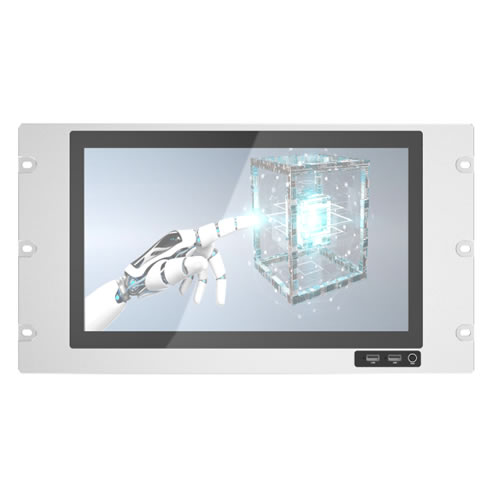
- YPC-JD Rack-Mount — 19-inch rack form factor for server rooms
- YPC-AD Andon — integrated light tower + audible alarm for production visual management
- YPC-MX Full-Lamination — premium optical bonding for maximum clarity
All series share: fanless cooling, IP65 front panel, wide-temp operation (-10°C to 60°C standard, ext. -30°C to 80°C), eMMC/SSD storage, hardware watchdog, MIL-STD-810G vibration/shock, power protection, 5–10 sec fast boot, remote management, 100,000+ hr MTBF.
Conclusion
Industrial PCs don't live in comfortable offices. They live in -20°C cold storage, 55°C forging workshops, dusty cement plants, and washdown-intensive food facilities. They experience thermal shock, condensation, vibration, and 24/7 operation — and are expected to run for 7–10+ years.
The PC in this story survived because it was engineered for these conditions from the ground up. Every design decision was driven by one question: will this keep running in the most extreme environment? For Senke industrial all-in-one PCs, the answer is yes — from -20°C to 55°C, from dust to washdown, from vibration to thermal shock. These PCs are built to survive. And they do.
About Senke Senke is a trusted global provider of industrial display solutions, touch computers, and HMI systems. With a full product lineup from 7" to 27", including ultra-thin (YPC-A), dustproof (YPC-WD), rack-mount (YPC-JD), Andon-enabled (YPC-AD), and full-lamination (YPC-MX) series, Senke serves customers in manufacturing, automotive, food & beverage, pharmaceutical, logistics, energy, mining, cold storage, and smart cities worldwide — delivering reliable products engineered for extreme industrial environments and 24/7 operation.
Contact Senke International Sales Department Email: sales@senke.com Website: www.senke.com
New News

Hot Products
Full Screen Digital Advertising Poster
Ultra-thin 4k
10 Inch Windows Rugged Tablet
Android 11,MT8788,4G,64G
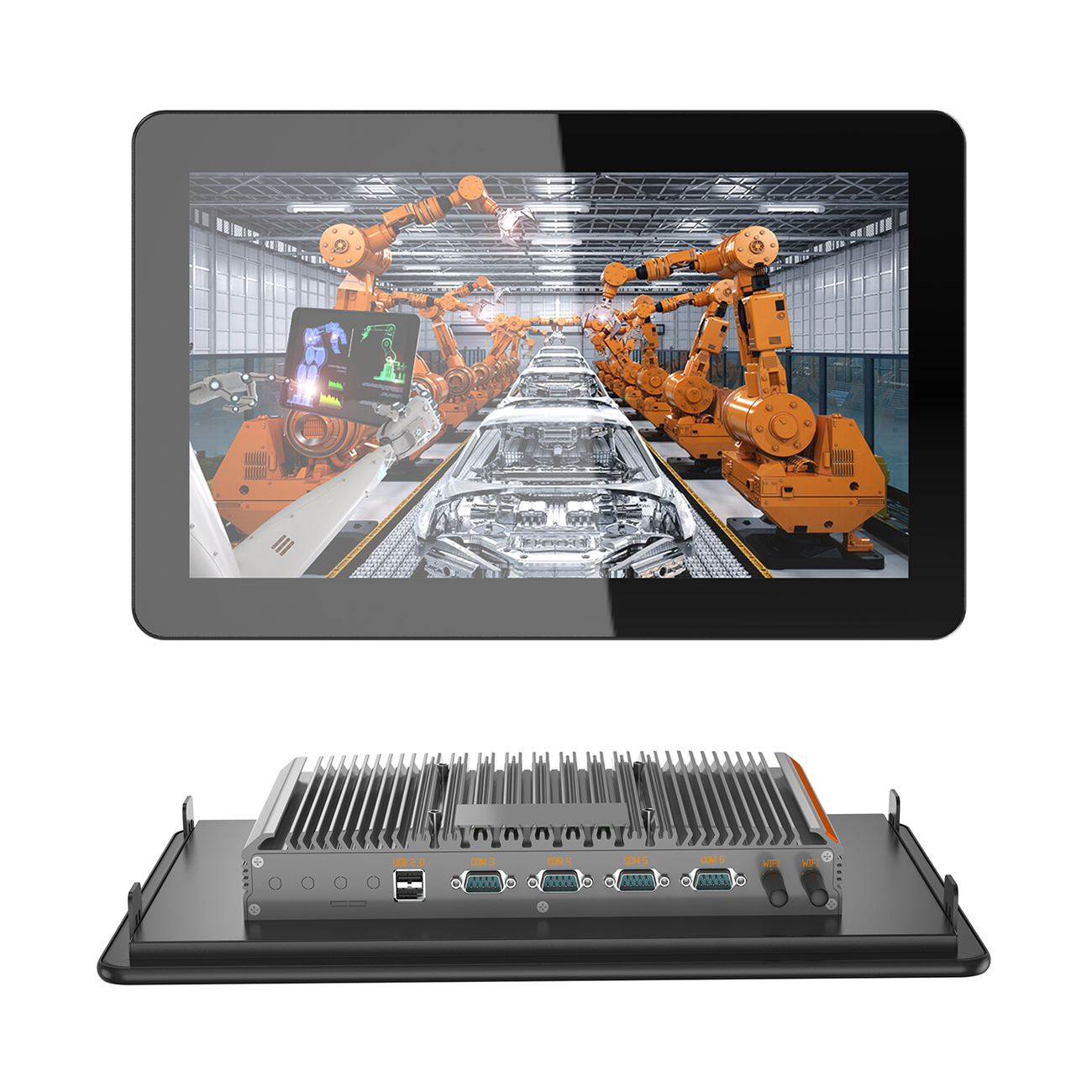

Senke Electronic is a manufacture of industrial panel pc, industrial box pc, rugged tablet, kiosk payment and digital display advertising.