Email: info@touchsh.com
User

Successful Project: Industrial Touch Monitors Applied to Production Line Control
2026-09-20 17:49:52
10
Successful Project: Industrial Touch Monitors Applied to Production Line Control
[Shanghai, China — September 18, 2026] — When a leading automotive parts manufacturer set out to upgrade the operator interfaces on its 12 assembly lines, it needed more than just bigger screens. It needed touch monitors that could survive factory dust, oil mist, high temperatures, and 24/7 operation — without failing. After evaluating multiple options, the customer chose Senke industrial touch monitors. 18 months later, the results speak for themselves.
Customer Background
The customer is a tier-1 automotive parts supplier producing engine components and transmission assemblies. Its production facility operates 12 assembly lines across two shifts, building precision components for major OEMs.
Each assembly line had a control console with a touch monitor for:
- Machine parameter display and adjustment
- Production count and cycle time monitoring
- Work order and quality data entry
- Alarm and fault display
- Operator guidance and instructions
The Challenge: Unreliable Touch Monitors
The customer had been using consumer-grade touchscreen monitors mounted on its assembly line consoles. Within 6–12 months of deployment, problems mounted:
Touchscreen Intermittency
Oil mist and metal dust from machining operations coated the screens, causing:
- Missed touches and false inputs
- Intermittent touch response
- Operators repeatedly tapping the same spot
- Quality data entry errors
Screen Dimming and Discoloration
Mounted near welding stations and heat-generating equipment, ambient temperatures reached 45–50°C. Consumer displays rated for 0–40°C:
- LCD panels dimmed and yellowed
- Backlights failed prematurely
- Screens became unreadable in summer months
Fan Failure and Dust Ingress
Consumer monitors had ventilation openings and cooling fans:
- Fans seized within 6 months from oil mist and dust
- Internal PCBs coated in conductive residue
- Intermittent failures and occasional short circuits
- Monthly cleaning required — costly and disruptive
The Cost
Each touch monitor failure caused 1–3 hours of line downtime. With 12 lines and multiple failures per year, the customer was losing hundreds of production hours annually — plus the labor cost of monthly maintenance.
The Solution: Senke Industrial Touch Monitors
After benchmarking several industrial display suppliers, the customer selected Senke industrial touch monitors for all 12 assembly lines.
Product Configuration
| Parameter | Specification |
|---|---|
| Screen sizes | 15" (8 lines), 17" (4 lines) |
| Touch technology | Projected Capacitive (PCAP), 10-point multi-touch |
| Gloved operation | Yes — enhanced sensitivity controller |
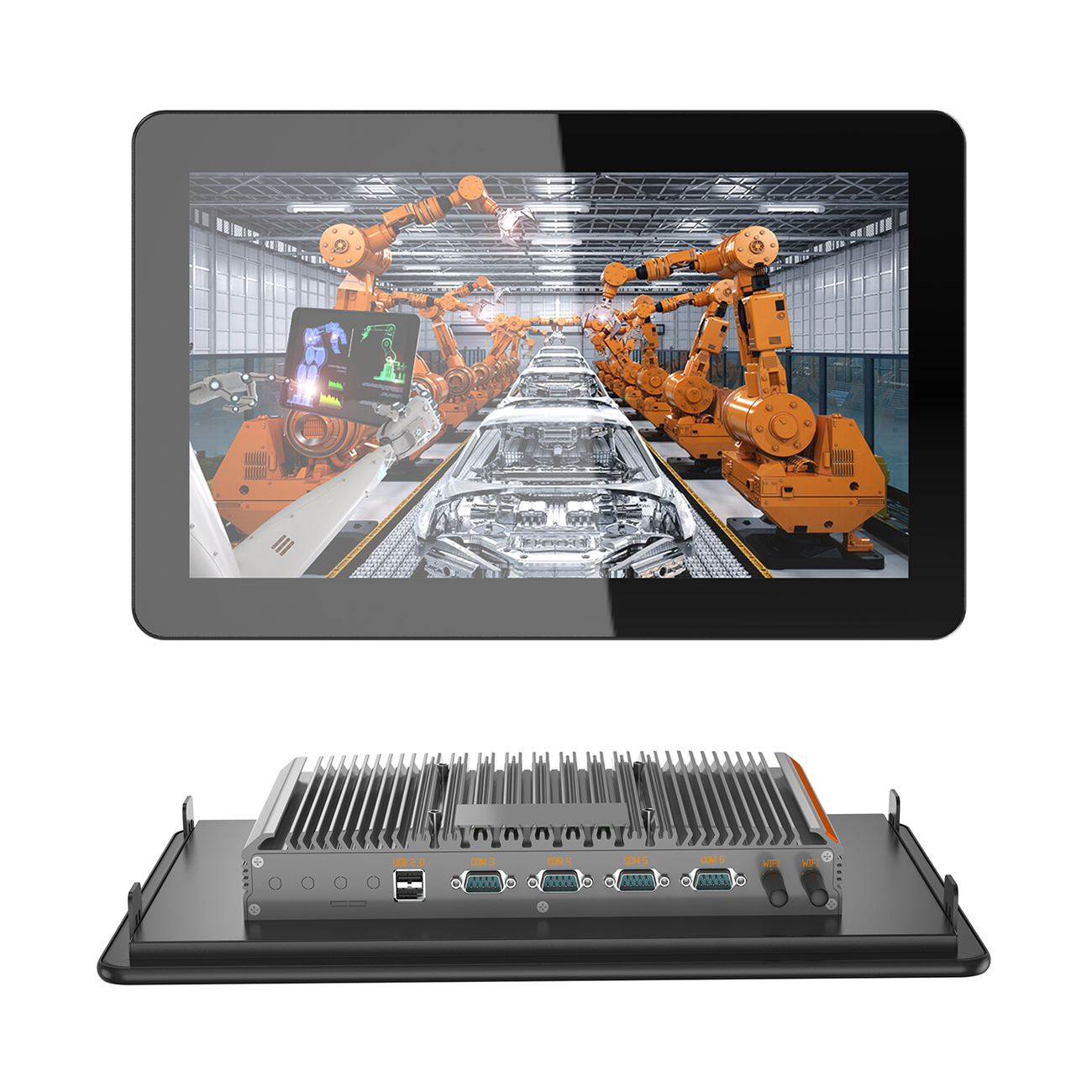
| Front panel rating | IP65 (dust-tight, water-jet resistant) |
| Cooling | Fanless passive (no vents, no fan) |
| Operating temperature | -10°C to 60°C |
| Brightness | 350 nits, anti-glare coating |
| Connectivity | RS232, Ethernet, USB, HDMI input |
| Mounting | Panel mount into existing console cutouts |
| OS | Customer's existing industrial PC (Windows-based HMI software) |
Why Senke?
1. True Industrial-Grade Construction Unlike consumer monitors repackaged in metal boxes, Senke monitors are designed from the ground up for industrial use:
- Fanless — no vents for oil mist and dust to enter
- IP65 front panel — sealed against oil and water spray
- Wide-temperature components — rated for the heat near welding stations
2. Glove-Friendly Capacitive Touch Assembly line operators wear ESD gloves. The customer had previously used resistive touchscreens, which required firm pressure and wore out quickly. Senke's PCAP touch:
- Responds through thin to medium ESD gloves
- 10-point multi-touch for zoom, swipe, and gesture-based HMI
- No wear-out — capacitive touch has no moving parts
- Wipes clean easily with oil-resistant surface
3. Drop-In Replacement Senke's monitors were designed to fit the existing console cutouts — no modification needed. HDMI and USB connectivity meant simple integration with the customer's existing industrial PC and HMI software.
4. Reliability Guarantee Senke's 100,000+ hour MTBF and 7–10 year product lifecycle commitment gave the customer confidence that this wasn't another 6-month disposable solution.
Deployment
The rollout proceeded over 6 weeks:
- Week 1–2: 2-line pilot at the most problematic stations. Monitored for 2 weeks.
- Week 3–4: Engineering validation of touch accuracy, display readability, and integration with existing HMI software.
- Week 5–6: Full deployment across remaining 10 lines, installed during scheduled maintenance windows.
Results After 18 Months
| Metric | Before (Consumer Monitors) | After (Senke Industrial) | Improvement |
|---|---|---|---|
| Touch-related failures/year | ~18 (1.5/line) | 0 | 100% reduction |
| HMI-attributable downtime hours/year | ~350 | ~210 | 40% reduction |
| Monthly maintenance visits | 2–3 | 0 | Eliminated |
| Average screen lifespan | 8–12 months | 18+ months and counting | 2x+ and continuing |
| Operator satisfaction | Low (missed touches, screen dimming) | High (responsive touch, clear display) | Significantly improved |
Additional Benefits
- Faster operation — responsive multi-touch vs. mushy resistive touch
- Cleaner appearance — IP65 sealed bezel wipes clean of oil and dust
- Consistent image quality — no dimming or yellowing after 18 months
- Standardized platform — all 12 lines use the same monitor model
Customer Feedback
"The old touchscreens were a constant source of complaints from our line operators — missed touches, unreadable screens, frequent failures. The Senke monitors have been a night-and-day difference. Touch is responsive even through gloves, the screens stay bright and clear, and we haven't had a single touchscreen failure in over a year. The ROI was clear within the first six months in avoided downtime alone."
— Production Engineering Manager, Automotive Parts Manufacturer
Why This Project Succeeded
- Right product for the environment — fanless, IP65, wide-temperature, glove-friendly touch directly addressed every known failure mode
- Pilot before scale — 2-line pilot proved performance before full commitment
- Industrial-grade, not consumer-grade — the gap between consumer touchscreens and true industrial touch displays is decisive in factory conditions
- Drop-in integration — no console modification, no HMI software changes, minimal disruption
Conclusion
This project demonstrates the measurable impact of specifying true industrial-grade touch monitors for production line control. By replacing consumer-grade displays with Senke's fanless, IP65-sealed, glove-friendly industrial touch monitors, the customer achieved:
- 100% reduction in touch-related failures (18-month period)
- 40% reduction in HMI-attributable downtime
- Elimination of monthly touchscreen maintenance
- 2x+ improvement in expected display lifespan
For production lines where every minute of downtime costs money, the choice between consumer-grade and industrial-grade touch displays isn't a budget decision — it's a reliability decision with direct impact on the bottom line.
About Senke Senke is a trusted global provider of industrial display solutions, touch computers, and HMI systems. With a full lineup from 7" to 27" — including ultra-thin, dustproof, rack-mount, Andon, and full-lamination series — Senke serves manufacturing, automotive, food & beverage, pharmaceutical, logistics, and energy customers worldwide. Every product is engineered for 24/7 industrial operation with fanless cooling, IP65 protection, wide-temperature range, and 7–10 year product lifecycle commitment.
Contact Senke International Sales Department Email: sales@senke.com Website: www.senke.com
New News
Hot Products
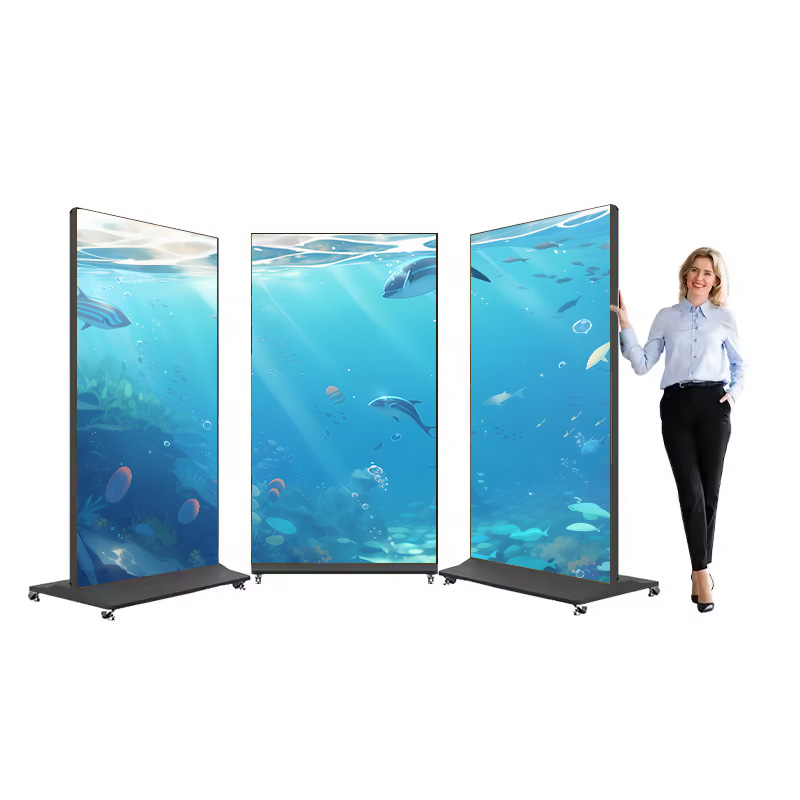
Full Screen Digital Advertising Poster
Ultra-thin 4k
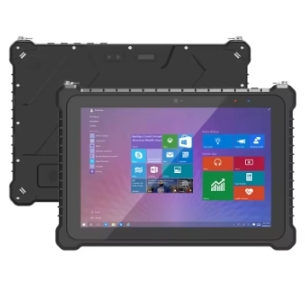
10 Inch Windows Rugged Tablet
Android 11,MT8788,4G,64G

Senke Electronic is a manufacture of industrial panel pc, industrial box pc, rugged tablet, kiosk payment and digital display advertising.